Sundials at Historic Mineral Springs: Timekeeping in Spa Gardens
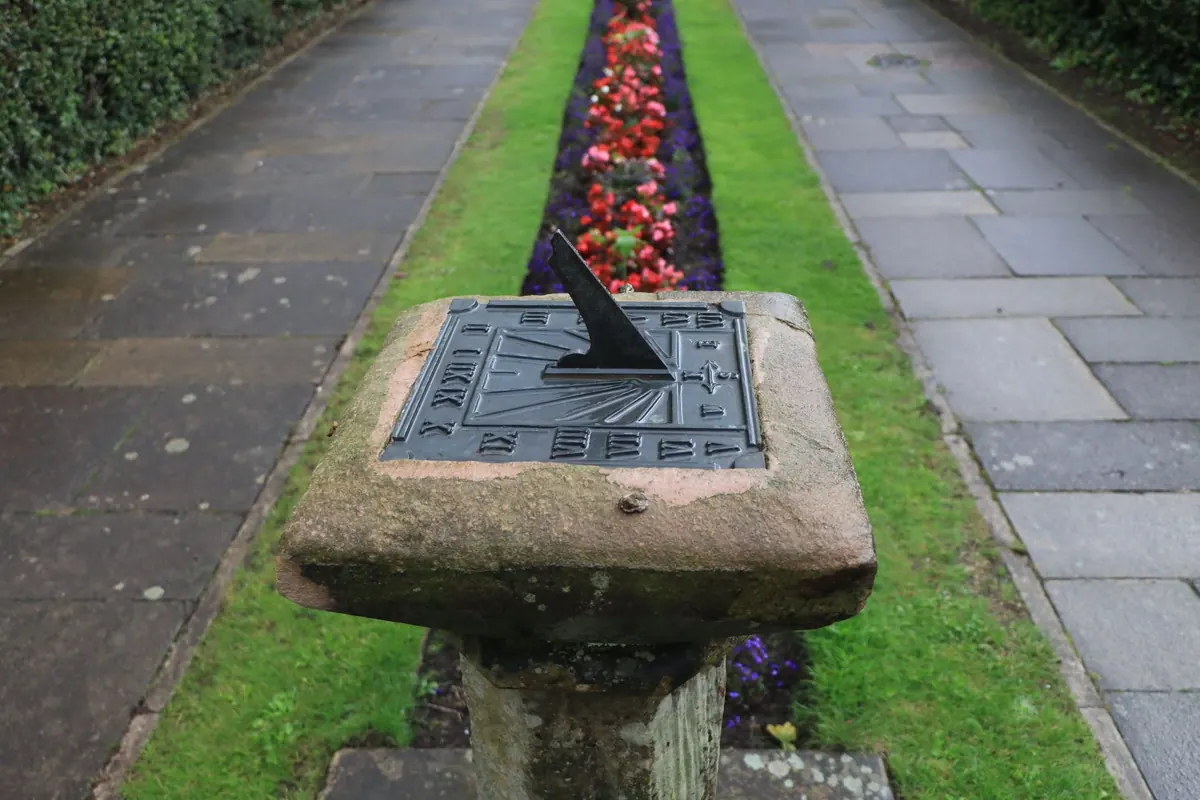
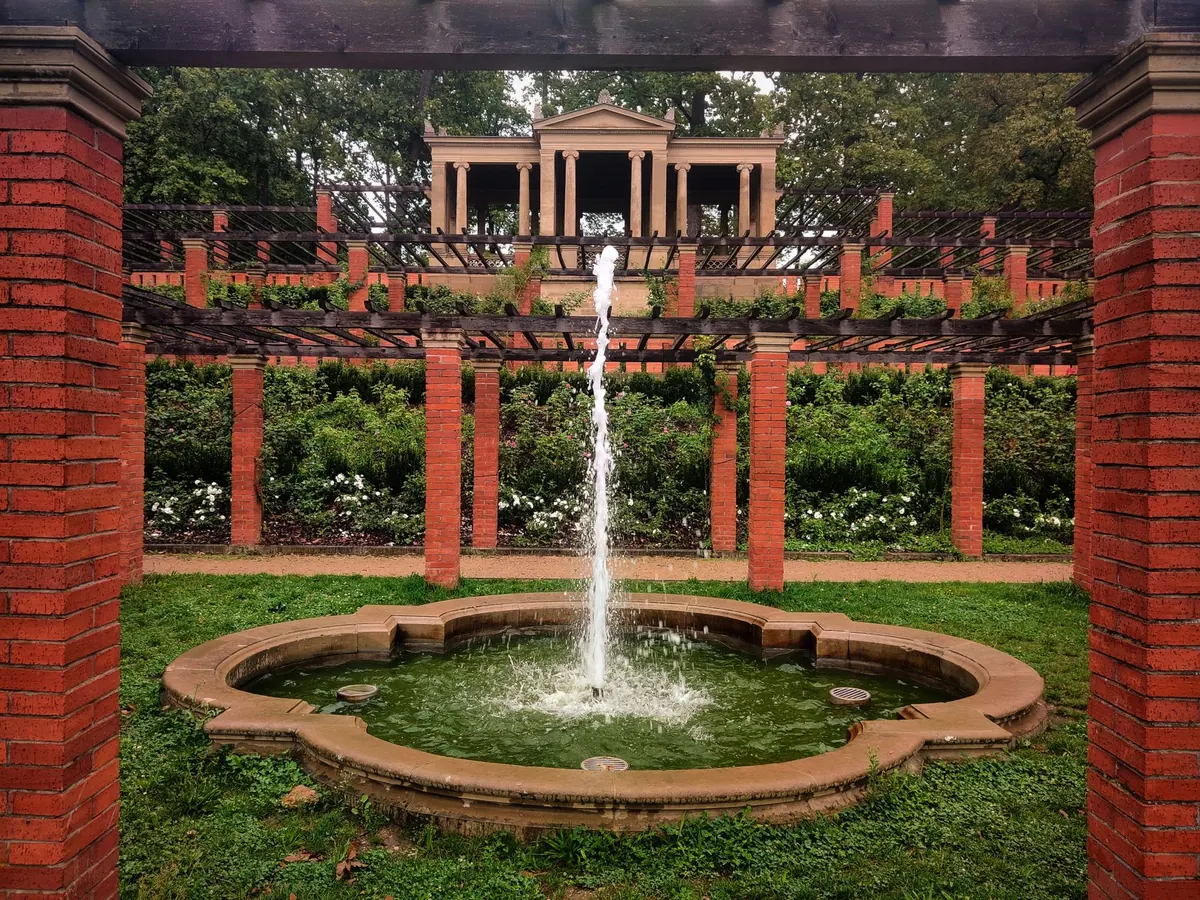
A gravel walk, a lime avenue, a colonnade where mineral water is handed out in small porcelain cups — and, where two paths cross, a stone pedestal carrying a bronze triangle. The sundial in a historic spa garden looks like decoration. It was also a working instrument, and in towns whose whole economy rested on a daily regimen of drinking, bathing and walking, a working instrument was not a small thing. The hours of a cure were prescribed. The sun was the one clock nobody could bribe, forget to wind, or leave behind in the pump room.
The cure ran on hours, not on moods
Mineral-spring towns organized the day with unusual strictness. The first and busiest drinking session came early, before breakfast; then came the walk of a fixed number of laps, the bath at an appointed hour, rest, a light meal, the band. Pump-room attendants worked to a clock, and the clock was usually inside the pump room. Outside, the sundial gave the time to everyone arriving across the park — which is why so many of them stand at path junctions, at the foot of steps to a drinking hall, or on the axis of a promenade rather than tucked into a quiet corner.
In Bath, Buxton, Baden-Baden, Karlovy Vary or Montecatini Terme the social day took its shape from that timetable, and the architecture followed: colonnades for walking in the rain, covered drinking halls, benches placed where the morning sun fell. A dial on a pedestal was the public face of the whole arrangement. It told a visitor whether the twelve-o'clock glass of water was still ahead of him or already gone.
What the dial is actually telling you
The triangular blade — the gnomon, or style — is the entire instrument. Its sloping edge must be parallel to the Earth's axis, which means it points at the celestial pole, and its angle above the horizontal equals the latitude of the place. In a spa at fifty degrees north, the style rises at fifty degrees. Get that wrong, or bend the blade, and the dial becomes a sculpture with numbers on it.
Sun time is not clock time
Even a perfectly made dial will disagree with your watch, and the disagreement is not a fault. A dial shows apparent solar time — the sun's real position in the sky. Clock time is averaged, and since the nineteenth century it has been tied to a standard meridian that may lie well east or west of the garden you are standing in. Longitude alone accounts for four minutes per degree. A spa a few degrees west of its national meridian can be a quarter of an hour "slow" before the sun's own seasonal variation is counted, and that variation adds or subtracts up to about a quarter of an hour across the year.
Good dials admit this. Some carry a table of corrections cut into the plate or painted on a nearby board. Some are deliberately set to show local mean time instead. Quite a few answer the problem with a motto and a shrug, which is a very spa-like response.
Latitude, date, maker
Look at the edge of the plate or the face of the pedestal. Many dials record a latitude, a year and a signature. If the latitude does not match the town, the dial was probably brought here from elsewhere, or the plate was re-cut for a new site. Either way it is a small piece of evidence about how the garden was assembled — rarely all at once, usually in layers.
A short field guide to spa-garden dials
Once you start noticing them, the variety is the pleasure. The repertoire is fairly consistent across Europe:
- Horizontal dials on pedestals. The commonest type by far: a flat plate, a polar style, Roman numerals. Usually at a crossing of walks or beside a spring head.
- Vertical dials on walls. South-facing walls of pump rooms, bath wings and pump-house gables. Often painted, often repainted, sometimes with the original lines still visible underneath.
- Polar, equatorial and armillary dials. A tilted plate or a ring on a column; the armillary sphere on a lawn is the showiest member of the family and the least useful in a shower.
- Analemmatic dials. An ellipse of hour marks with a scale of months; you stand on the date and your own shadow does the work. Popular in parks because they are climbable, and they survive children better than bronze.
- Noon marks and meridian lines. A line inlaid in a floor, terrace or church pavement that the sun crosses at true noon. See below.
- Portable dials. Ring dials, folding diptych dials, small ivory or brass pieces a visitor carried in a pocket. Mostly in museum cases now, but worth seeking out in a spa's local collection.
The meridian comes indoors
A step further and the instrument enters the building. The meridian line — a small aperture high in a wall or roof admitting a spot of light that crosses the floor at true noon — was the standard way to fix noon in a building before clocks could be trusted, and the technique appears in churches, civic halls and observatories across Europe. Spa architecture borrowed the idea in a looser, more decorative way, but the logic is the same: find the sun's highest point, mark it, and arrange everything else around that fact.
You can read the result without any instruments at all. Walk through a historic spa park and look at which façades are glazed and open to the east, where the colonnade closes against the afternoon, where the bandstand sits to catch the last sun. A spring has a fixed point in the ground; the sun has a fixed point at noon; a good spa building joins the two. That is the meridian of the source, expressed in stone rather than in bronze.
Mottoes, benches and the social shadow
Many dials speak. Horas non numero nisi serenas — I count only the sunny hours — is among the most common inscriptions in Europe, and it suits a garden built for slow recovery. Others warn, flatter the donor, or name the mayor who paid for the pedestal. Read them; they are the cheapest way into the mentality of a place that sold leisure as part of a treatment.
Then look at the bench. It is usually on the south or east side of a hedge, positioned for the morning rather than the afternoon, and placed so that the dial can be seen without getting up. Planting matters too: a dial needs a low horizon to the south. A park that lets a shrub grow to the height of the plate has quietly retired the instrument, even though the plate still says the hours.
How to look at a spa-garden sundial
- Check the style first. The sloping edge should point at the pole, roughly toward the North Star. If it is bent or the pedestal has shifted, nothing else on the plate will make sense.
- Compare, but do not expect agreement. Note the hour the shadow shows, then your phone. A difference of ten to thirty minutes is normal in most of Europe; a difference of hours means the dial is decorative, damaged, or set for another latitude.
- Look for the engraver's notes. Latitude, year, maker, sometimes the words tempus solare or a correction table. Photograph the plate edge-on as well as flat.
- Read the motto aloud. It is the one part of a dial written for you rather than for the sun.
- Inspect the ground. Fresh paving, a raised terrace or a new kerb can tilt a dial by a degree or two, which is enough to spoil it. Repairs often explain odd readings better than the engraving does.
- Come back near noon. Dials are least reliable in midwinter, when the sun is low and the plate may sit in the shadow of a building for hours. Late morning in spring or autumn is when they look and work best.
One last piece of etiquette, since these objects are old and often unprotected: do not polish the bronze, do not lean on the gnomon, and do not trace the numerals with a key. Verdigris and a slightly worn plate are part of the record. If a dial in your local park has lost its style or been swallowed by planting, the parks department is usually glad to hear about it — and occasionally even to act.
Photo: Prateek Patankar / Pexels
You Might Also Like
At the winter solstice a sundial's shadow stretches two or three times the gnomon's height. Here is how to plan, expose, compose and protect camera and dial in the cold.
A hands-on family guide to the spring equinox: plant a stick, track its shadow, measure it at noon, and find true north with chalk and a child's height.